Presbyterianism in Colonial North Carolina
How Presbyterianism came to North Carolina through Ulster Scots and Scottish Highlanders, from the early 1700s through the founding of First Presbyterian Church of Raleigh. Read More
Welcome to Ulster Worldly, a blog about the history of Presbyterianism. Many of these stories come from my own family, many others come from my own denomination.
Tim Hopper
Raleigh, NC
How Presbyterianism came to North Carolina through Ulster Scots and Scottish Highlanders, from the early 1700s through the founding of First Presbyterian Church of Raleigh. Read More
The Presbyterian Church's division over slavery from the Old School-New School split through the Civil War, examining the debates that fractured American Presbyterianism. Read More
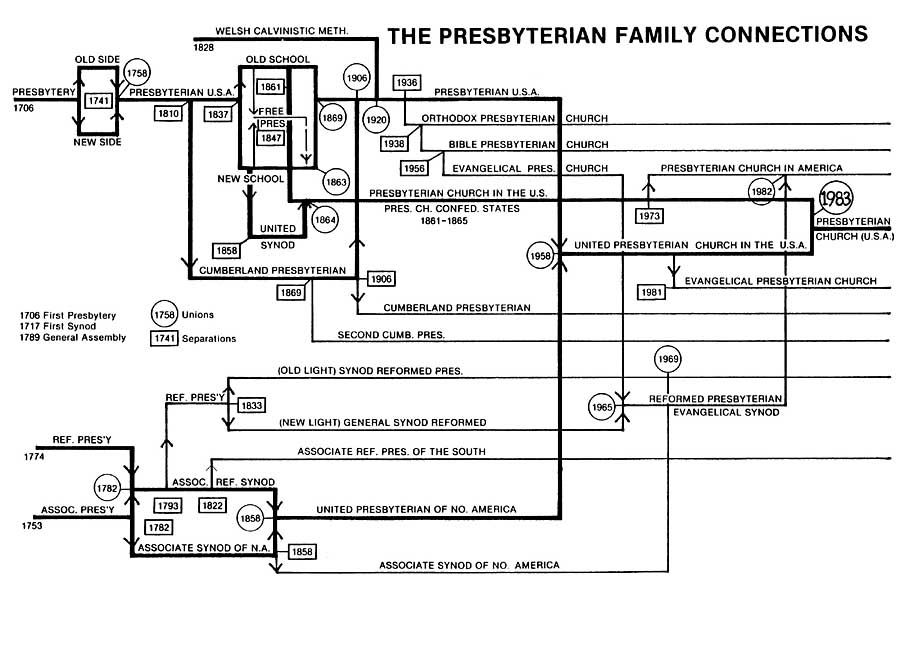
Understanding the Reformed Presbyterian Church of North America (RPCNA) and the Associate Reformed Presbyterian Church (ARP), their tangled histories, and how they relate to modern Presbyterianism. Read More
My great great grandfather Archibald Alexander Barron was a ruling elder in First Associate Reformed Presbyterian of Rock Hill, SC. The ARP is historically a conservative denomination with a high regard for their confessional standards.
In reading The Centennial History First Associate Reformed Presbyterian Church, Rock Hill, South Carolina, I read a surprising paragraph about my ancestor’s passing.
By the time the 1911 addition was made, the church had become more relaxed in its attitude toward church art, and the memorial windows placed in the church at this time were intended to illustrate stories from the Bible, with human figures and representations of Christ. The “Good Shepherd Shepherd” window, depicting Christ leading a flock of sheep, was a memorial to Archibald Alexander Barron, and was given by his family.
The Westminster Larger Catechism teaches that the Second Commandment forbids “the making any representation of God, of all or of any of the three persons, either inwardly in our mind, or outwardly in any kind of image or likeness of any creature whatsoever”. As early as 1911, the ARPs were loosening their commitment to this teaching.
Incidentally, the 1911 renovation also added an organ. While seen as a “traditional” church fixture today, this would have been a shock to the older ARPs who were committed to a capella singing in worship.
From Sean Lucas’s For a Continuing Church: The Roots of the Presbyterian Church in America:
The only response that the PCUS leadership could offer was “experimental” worship as a way of connecting with young people. One such 1968 service offered at Montreat received a full review in the pages of Presbyterian Journal: electric guitars and folk music, especially Bob Dylan’s anthem “Blowin’ in the Wind,” a dialogue in place of the sermon that focused on social-gospel causes with no Bible references at all, and a lack of traditional liturgical structures.
The evening service was more of the same: a jazz trio, a movie that focused on race and poverty, a message that called for economic and political justice, a litany that focused on social sins, the Lord’s Supper accompanied by “We Shall Overcome,” and the service’s ending with “sacramental applause.”
On June 10, 2021, Mr. Matthew Ezzell interviewed my pastor Rev. David Okken about his 17 years on the mission field in Karamoja, Uganda with the Orthodox Presbyterian Church. The audio of the interview is available below.
You can also download mp3 file directly or search for “Ulster Worldly” in your podcast app of choice.
Eulogy for Joseph Barron Hopper by his brother-in-law Dr. G. Thomson Brown. Read More
In the late 1970s, the Presbyterian Church in America began the consider what would become an invitation to the Orthodox Presbyterian Church and the Reformed Presbyterian Church, Evangelical Synod to be organically joined and received with the PCA. The RPCES would join the PCA in 1982.
A few years ago, I came across a pamphlet from 1979 at pcahistory.org that included the map below of how the PCA, OPC, and RPCES were geographically distributed at the time.
This geographically is inextricably linked to the history of these three denominations; it is interesting to consider how this distribution developed, and how it has evolved in the last 40 years.
I’ve run the Twitter account @pres_history for the last 5 years. I mostly use it to tweet posts from Today in OPC History and This Day in Presbyterian History, but I occasionally share other things I’m discovering and questions I’m asking.
Since Twitter tends to be ephimeral, I compiled a list of question I’ve asked over the last 3 years; most of them I still don’t have answers for.
Names of the ministers who formed the first general assembly of the Orthodox Presbyterian Church Read More